June 11, 2005
Weekend in Shanghai Ultimate
I was exhausted.
It was the deciding point of the semi-finals against Korea and they only needed one more score to finish us off. I had been chasing their all-tournament team member up and down the field the last two points, but it felt like hours to me. I knew the pressure well--a big game, top-notch opponent--I had been in similar situations in the States during College Regionals and Nationals. But this time I was in China, with 20 people I had met only two days earlier relying on me to shut my man down.
My guard slipped just for a second and he flashed up the sideline. Bam! Score. Game over.
After three days in Beijing on my first visit to China, I had left my fellow students for Shanghai. My professor described our trip to Beijing as a way to learn about Chinese life and culture, so I wanted to learn how parts of my culture interacted directly with Chinese culture—I wanted to play Ultimate Frisbee.
A week before I arrived, I decided find out if there was a team in Beijing I could practice with while I was there. It turned out there was a team, Big Brother, and they would be travelling to Shanghai the first weekend I was in the country. I exchanged a flurry of emails in the short time before I left from America to get a flight to Shanghai from Beijing, a hotel room and a spot on the team arranged. Thankfully, Michelle and Zhalen from Big Brother worked quickly to arrange everything with me, even though we had never officially met.
Back home, nearly every university has an ultimate team and there are numerous teams across America and Canada that include more experienced players and a very high level of competition. I have played four years at my university, where we have qualified twice for College Nationals. There is a great sense of community and personality between players. Although differences exist in jobs and studies, Ultimate players share a fun-loving bond of athleticism and sportsmanship in a sport with much less coverage than basketball or football.
I found very quickly from students in Beijing that most Chinese people are not familiar with Frisbee (fei pan) or at least not with the game of Ultimate. The game was started in America and combines a combination of skills and strategies from games like soccer, football, basketball and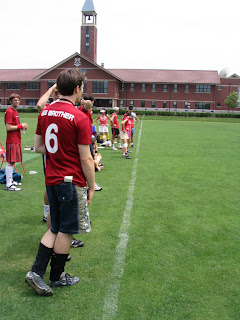 hockey. What makes Ultimate Frisbee unique among many sports though, is that spirit of play (sportsmanship) is respected above all other things. It is a non-contact sport with many rules, but there are no referees to make calls, all players make their own foul calls and resolve their own disputes.
My team’s tournament had ended with that point, but I never felt like I let them down. I was only passing through for one tournament, but the team included me in all respects. They welcomed me immediately, as each player made an effort to get to know me and make me feel like part of the team.
Most of the players were from America or Canada, but there were many from other parts of China and Asia. I discovered that everyone had found the game a different way in Asia. Some played in America, like one of Beijing’s captains, Zhalen. And others like Michelle started playing nine years ago after she arrived in Beijing.
“A friend introduced me to it,” she said. “I had never heard of the game before and I found out it’s not just passing the disc, it’s a structured game.”
Zhalen said he’s, “always chattin’ to people about ultimate. It spreads through word-of-mouth.”
In my case, I searched for an internet site and was lucky to find such great team-mates in Beijing.
Like any good ultimate tournament I had been to, Shanghai featured a party the night after the first day of games. Each team was to dress in a certain theme and Zhalen chose the colour pink to be ours. I was outfitted with a bright pink t-shirt emblazoned with Care Bears that said “Free Hugs” and pink pants that Zhalen threw at me to wear on our way out of the hotel.
Properly emasculated, I was ready to party.
At the bar it was hard to believe the number of players from other teams who introduced themselves to me and asked who I was because they didn’t recognize me. They wanted to know why I was in China, how long I was staying, where I was from and what experience I had playing. I had people offer to show me around their country if I visited, or come play with their team sometime and even one person I talked to had attended my university.
Then I met Sandy from the Beijing ‘B’ team, who insisted since it was my only weekend in Shanghai I needed to see at least some of the city. She was nice enough to take me outside to The Bund walkway along the river at 10:00 at night. I was a six-foot American on one of the busiest streets in Shanghai, dressed entirely in an obnoxious pink ensemble. I was not inconspicuous.
Many people stared at us, a few asked Sandy (a native Chinese speaker) where I was from and what “Free Hugs” meant. I felt awkward and occasionally like escaping, but the view of the lighted street was incredible and the people were amiable and good natured about the all-pink spectacle. More importantly, I didn’t know how to get back to the bar.
I survived the ordeal unscathed and with another memorable experience from the weekend. It was another memory for me to tuck away that I otherwise would have missed had it not been for Ultimate.
The Asian Ultimate scene was described to me as a “transient” community. Although some players stay in one city for many years working for a school or a corporation, most only spend a year or two before they are gone to somewhere else. I still find it amazing how closely a group of people can come together through a sport. In Shanghai, Ultimate Frisbee transcended countries, genders and cultures. My team didn’t win the tournament (Shanghai did against Korea), but I could not have had a better time or a better experience.
It’s rare to be able to travel to a foreign place and meet so many different people who share something similar and special to you. Luckily, Ultimate has become an international culture where players can find their compatriots wherever they go.*
Anyone looking for information on how or where to play Ultimate Frisbee in China can visit these websites: http://www.beijingultimate.com/, http://www.shanghaiultimate.com/, http://portal.hkupa.com/.
Weekend in Shanghai Ultimate
I was exhausted.
It was the deciding point of the semi-finals against Korea and they only needed one more score to finish us off. I had been chasing their all-tournament team member up and down the field the last two points, but it felt like hours to me. I knew the pressure well--a big game, top-notch opponent--I had been in similar situations in the States during College Regionals and Nationals. But this time I was in China, with 20 people I had met only two days earlier relying on me to shut my man down.
My guard slipped just for a second and he flashed up the sideline. Bam! Score. Game over.
After three days in Beijing on my first visit to China, I had left my fellow students for Shanghai. My professor described our trip to Beijing as a way to learn about Chinese life and culture, so I wanted to learn how parts of my culture interacted directly with Chinese culture—I wanted to play Ultimate Frisbee.
A week before I arrived, I decided find out if there was a team in Beijing I could practice with while I was there. It turned out there was a team, Big Brother, and they would be travelling to Shanghai the first weekend I was in the country. I exchanged a flurry of emails in the short time before I left from America to get a flight to Shanghai from Beijing, a hotel room and a spot on the team arranged. Thankfully, Michelle and Zhalen from Big Brother worked quickly to arrange everything with me, even though we had never officially met.
Back home, nearly every university has an ultimate team and there are numerous teams across America and Canada that include more experienced players and a very high level of competition. I have played four years at my university, where we have qualified twice for College Nationals. There is a great sense of community and personality between players. Although differences exist in jobs and studies, Ultimate players share a fun-loving bond of athleticism and sportsmanship in a sport with much less coverage than basketball or football.
I found very quickly from students in Beijing that most Chinese people are not familiar with Frisbee (fei pan) or at least not with the game of Ultimate. The game was started in America and combines a combination of skills and strategies from games like soccer, football, basketball and
 hockey. What makes Ultimate Frisbee unique among many sports though, is that spirit of play (sportsmanship) is respected above all other things. It is a non-contact sport with many rules, but there are no referees to make calls, all players make their own foul calls and resolve their own disputes.
My team’s tournament had ended with that point, but I never felt like I let them down. I was only passing through for one tournament, but the team included me in all respects. They welcomed me immediately, as each player made an effort to get to know me and make me feel like part of the team.
Most of the players were from America or Canada, but there were many from other parts of China and Asia. I discovered that everyone had found the game a different way in Asia. Some played in America, like one of Beijing’s captains, Zhalen. And others like Michelle started playing nine years ago after she arrived in Beijing.
“A friend introduced me to it,” she said. “I had never heard of the game before and I found out it’s not just passing the disc, it’s a structured game.”
Zhalen said he’s, “always chattin’ to people about ultimate. It spreads through word-of-mouth.”
In my case, I searched for an internet site and was lucky to find such great team-mates in Beijing.
Like any good ultimate tournament I had been to, Shanghai featured a party the night after the first day of games. Each team was to dress in a certain theme and Zhalen chose the colour pink to be ours. I was outfitted with a bright pink t-shirt emblazoned with Care Bears that said “Free Hugs” and pink pants that Zhalen threw at me to wear on our way out of the hotel.
Properly emasculated, I was ready to party.
At the bar it was hard to believe the number of players from other teams who introduced themselves to me and asked who I was because they didn’t recognize me. They wanted to know why I was in China, how long I was staying, where I was from and what experience I had playing. I had people offer to show me around their country if I visited, or come play with their team sometime and even one person I talked to had attended my university.
Then I met Sandy from the Beijing ‘B’ team, who insisted since it was my only weekend in Shanghai I needed to see at least some of the city. She was nice enough to take me outside to The Bund walkway along the river at 10:00 at night. I was a six-foot American on one of the busiest streets in Shanghai, dressed entirely in an obnoxious pink ensemble. I was not inconspicuous.
Many people stared at us, a few asked Sandy (a native Chinese speaker) where I was from and what “Free Hugs” meant. I felt awkward and occasionally like escaping, but the view of the lighted street was incredible and the people were amiable and good natured about the all-pink spectacle. More importantly, I didn’t know how to get back to the bar.
I survived the ordeal unscathed and with another memorable experience from the weekend. It was another memory for me to tuck away that I otherwise would have missed had it not been for Ultimate.
The Asian Ultimate scene was described to me as a “transient” community. Although some players stay in one city for many years working for a school or a corporation, most only spend a year or two before they are gone to somewhere else. I still find it amazing how closely a group of people can come together through a sport. In Shanghai, Ultimate Frisbee transcended countries, genders and cultures. My team didn’t win the tournament (Shanghai did against Korea), but I could not have had a better time or a better experience.
It’s rare to be able to travel to a foreign place and meet so many different people who share something similar and special to you. Luckily, Ultimate has become an international culture where players can find their compatriots wherever they go.*
Anyone looking for information on how or where to play Ultimate Frisbee in China can visit these websites: http://www.beijingultimate.com/, http://www.shanghaiultimate.com/, http://portal.hkupa.com/.


